
The First 48 Hours of Residential Training
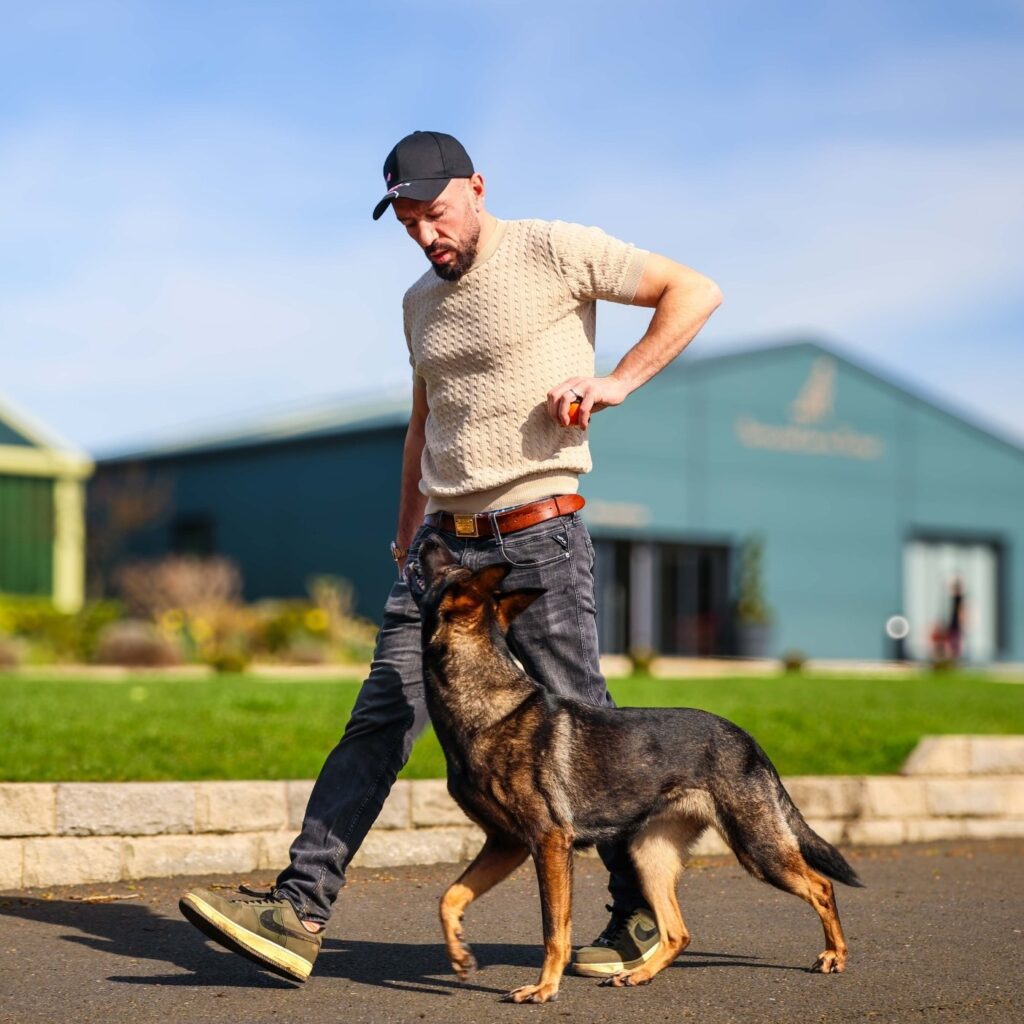
Handing your dog over for residential training is a big step. Most owners I meet have already tried everything they can think of, and they’re nervous about what happens once they drive away.
So here’s what the first two days actually look like at Heronswood Canine Retreat, our licensed training facility near Lancaster.
Day one: nothing is asked of him
The first thing your dog needs isn’t training. It’s time to work out where he is.
New smells, new people, new sounds. A dog who has just arrived is processing all of it, and a stressed dog can’t learn. So on day one we ask nothing of him. No commands, no sessions.
As soon as he arrives, we take him for a walk around the grounds so he can have a good sniff and start to settle. Then he goes to his own luxury room to relax, and from that point on we’re keeping an eye on him.
While he settles: watching, not fixing
While he settles, I’m watching. I want to see the dog you live with, not the dog I’ve tried to change.
- How does he cope with new people?
- What happens when another dog appears in the distance, and at what distance?
- Will he take food from me? If not, he’s telling me he’s stressed, and that tells me where to start.
- How does he settle when nothing is happening?
A lot of the behaviour owners describe won’t show up straight away. Some dogs are on their best behaviour for a day or two. Others show everything at once. Both are useful.
Day two: the plan takes shape
By the second day I’ve got a much clearer picture of what’s actually driving the problem. Fear looks different from frustration, and frustration looks different from a dog who’s simply never been taught what you want.
That’s when the programme gets built around your dog: his temperament, his history and how he thinks. It’s never a template.
The first sessions are short and easy. I want your dog getting things right and enjoying it, because a dog who likes training will work harder for you later.
As he progresses, his training moves around the whole site. We deliberately keep horses, alpacas, goats, black swans, peacocks, emus and a miniature Shetland pony here, so he learns to stay focused on you around real distractions, not just in a quiet field.
What we don’t do
We don’t use force. Flat collar and lead, positive reinforcement, and lots of reward. No prong collars, no shock collars, no punishment.
We also don’t rush. Pushing a dog too close to what scares him in the first 48 hours can set him back weeks. The fastest way through is to start where he can succeed.
Hearing from us
You’ll get an update from us every week while he’s with us, so you can see how he’s getting on and what he’s been working on.
It’s completely normal to miss your dog and wonder how he’s getting on. Ask us anything, any time.
What it’s all building towards
Getting a dog to turn around with focused, consistent work is, honestly, the straightforward part. Whether he stays trained is down to what happens when he comes home.
Here’s the pattern I see. You pick up your trained dog and you’re delighted for a fortnight. Then, without realising, you drift back to the old timing, the old tone, the little inconsistencies that built the problem in the first place. He’s reading you the whole time, and slowly he drifts back with you.
He hasn’t forgotten anything. A dog always mirrors the person on the end of the lead.
So a big part of residential training isn’t spent on the dog at all. It’s spent on you: your timing, your body language, holding a boundary without wobbling, and rewarding at the right moment instead of the wrong one. I don’t hand a trained dog back and wave you off. Teaching you to keep him there is the real work.
That’s why every residential dog goes home with:
- A full handover, where you learn to handle him the way he’s been trained.
- A four-week re-bonding plan, so the two of you rebuild your relationship the right way from day one at home.
- A training plan to follow at home, so you know exactly what to practise and when.
- A follow-up session four weeks later, in person or over Zoom if you live further away or overseas, to check how you’re both getting on and fix anything that’s started to slip.
If you’re wondering whether residential is right for your dog, book a consultation and we’ll talk it through honestly. Sometimes 1-to-1 lessons are the better fit, and I’ll tell you if I think so.
